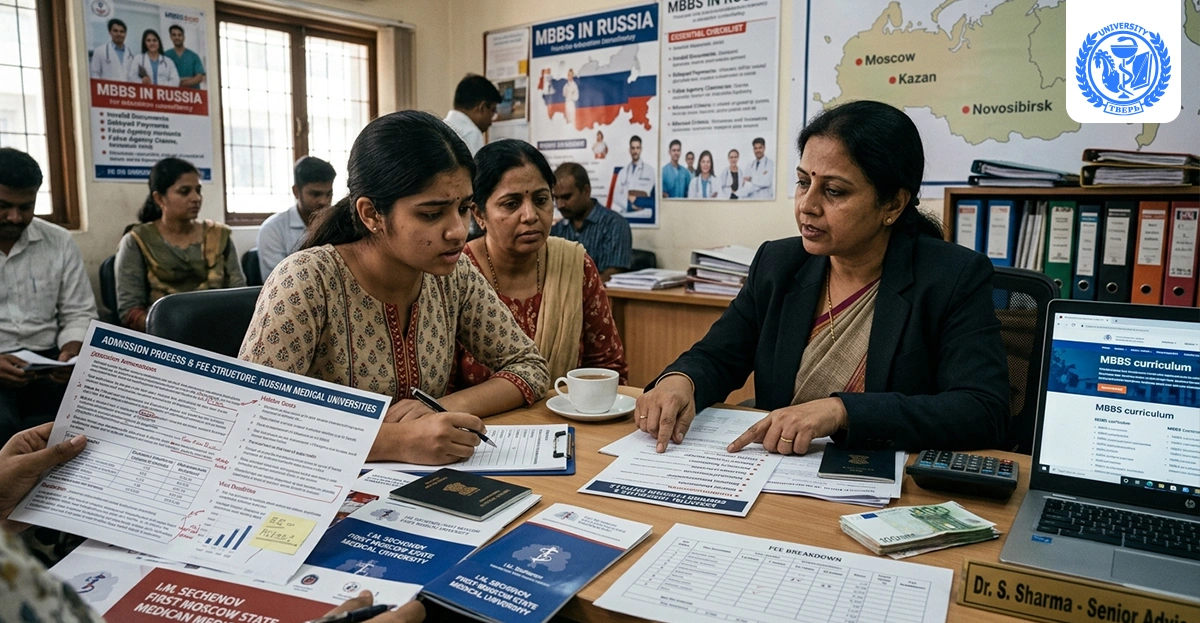
Every year, thousands of Indian students choose MBBS in Russia for its affordable fees, globally recognised universities and English-medium teaching. Yet a large number of these students lose an academic year not because they were unqualified, but because of avoidable errors made during the application stage. Choosing an unrecognised college, missing a document deadline or trusting an unverified agent can undo months of preparation. If you are exploring the MBBS application admission process, understanding what not to do is just as important as knowing what to do. This article breaks down the most frequent mistakes and how you can stay clear of them.
What to Check Before Starting Your MBBS Application
The university, admission criteria, course details, total fee charges, and necessary documents should be verified before taking admission in MBBS in Russia. According to the NMC, the course and fee details should be acquired directly from the foreign university, along with verifying if the course satisfies the requirements of foreign medical graduates.
Mistake 1: Applying Without Checking NMC Recognition
The single most damaging error is selecting a university that does not meet Indian regulatory standards. Under the National Medical Commission's Foreign Medical Graduate Licentiate Regulations, the course must be a minimum of 54 months, taught in English throughout, and completed in a single institution with a 12-month internship in the same university.
Always verify the university's listing in the World Directory of Medical Schools and cross-check the latest advisories on the NMC official website. A degree that fails these conditions leaves you ineligible for the FMGE/NExT examination no matter how good the campus looked in a brochure.
Mistake 2: Underestimating NEET Requirements
NEET qualification is mandatory for any Indian student pursuing MBBS abroad. Some applicants assume a low score is enough because "Russia has no entrance exam." While Russian universities do not conduct their own entrance test, your Eligibility Certificate and later licensure depend entirely on a valid NEET result. Keep your scorecard, admit card, and Class 10 and 12 mark sheets ready before you begin any MBBS application.
Mistake 3: Choosing a University Based on Price Alone
Low tuition is attractive, but the cheapest option is rarely the most economical. Students often ignore:
-
Hostel, mess, and medical insurance costs charged separately.
-
Compulsory Russian language modules from Year 2 for clinical postings.
-
Whether the university has its own teaching hospital.
-
FMGE/NExT pass percentages of previous batches.
-
Faculty-to-student ratio and lab infrastructure.
Compare a complete six-year cost, not a first-year figure. A transparent fee structure should list tuition, accommodation and one-time charges separately.
Mistake 4: Trusting Unverified Agents
Many MBBS admission mistakes begin with a middleman promising guaranteed seats, inflated scholarships or "direct admission without NEET."
Work only with representatives officially authorised by the university, insist on a written admission letter issued by the institution itself, and never pay large sums in cash. Ask for the invitation letter number so you can verify it independently.
Mistake 5: Poor Document Preparation
Documentation errors delay visas more than anything else. A typical checklist includes:
|
Document |
Common Error |
|
Passport |
Validity under two years at the time of applying |
|
NEET scorecard |
Not attested or submitted in low-quality scan |
|
Class 10 & 12 mark sheets |
Missing apostille from MEA |
|
Birth certificate |
Name spelling mismatch with passport |
|
Medical & HIV test report |
Issued too early, expiring before travel |
|
Invitation letter |
Applying for a visa before it is received |
Even one spelling mismatch between your passport and academic records can trigger rejection. Verify apostille and translation requirements early, since the Ministry of External Affairs process takes time during peak season.
Mistake 6: Ignoring the Russian Language Component
Students who study MBBS in Russia are taught in English, but clinical rotations require interaction with local patients. Those who skip Russian language classes in the first two years struggle badly during hospital postings. Treat the language module as a core subject, not a formality.
Mistake 7: Applying Too Late in the Season
Russian universities have intake seasons commonly in September, with limited spring intakes. Invitation letters, apostille, visa appointments, and ticketing together take six to ten weeks. Students who begin their MBBS application in July frequently miss the September session entirely. Start by March or April.
Mistake 8: Not Planning for Life After Graduation
An MBBS in Russia should be planned backwards from your career goal. If you intend to practise in India, focus on FMGE/NExT preparation from Year 3 onward. If you are considering the USMLE or PLAB, confirm that your university is listed appropriately for those pathways and check WHO and international directories such as the WHO resources on medical education standards before committing.
Mistake 9: Overlooking Student Welfare and Support
Climate, food, hostel safety and Indian mess facilities directly affect academic performance. Ask current students about winter support, hostel heating, campus security and the availability of an Indian student cell. A university with structured support helps you settle within weeks instead of months.
Quick Checklist Before You Apply
-
Confirm NMC and WDOMS listing
-
Keep a valid NEET scorecard
-
Compare six-year total cost
-
Deal only with authorised representatives
-
Complete apostille and translations early
-
Apply at least four months before the intake
-
Plan licensure exam preparation from Year 1
Conclusion
Most problems faced by Indian medical aspirants abroad are traceable to the application stage, not the classroom. By verifying recognition, preparing documents correctly, avoiding unverified agents, and applying early, you protect both your money and your academic year. A well-researched approach to MBBS in Russia turns a stressful process into a straightforward one. Explore the verified admission process and eligibility details or get in touch with our counsellors to review your profile before you apply.
FAQs
Is NEET compulsory for MBBS in Russia?
Yes. Indian students must qualify NEET to be eligible for admission and for the FMGE/NExT licensure examination later.
Is the MBBS degree from Russia valid in India?
Yes, provided the university meets NMC'sFMGEL Regulations, and the graduate clears the required licensure examination.
What is the ideal time to start applying?
Begin between March and May for a September intake to allow enough time for the invitation letter, apostille, and visa.
Is the course taught in English?
Most recognised Russian universities offer full English-medium MBBS programmes, with Russian language taught alongside for clinical practice.