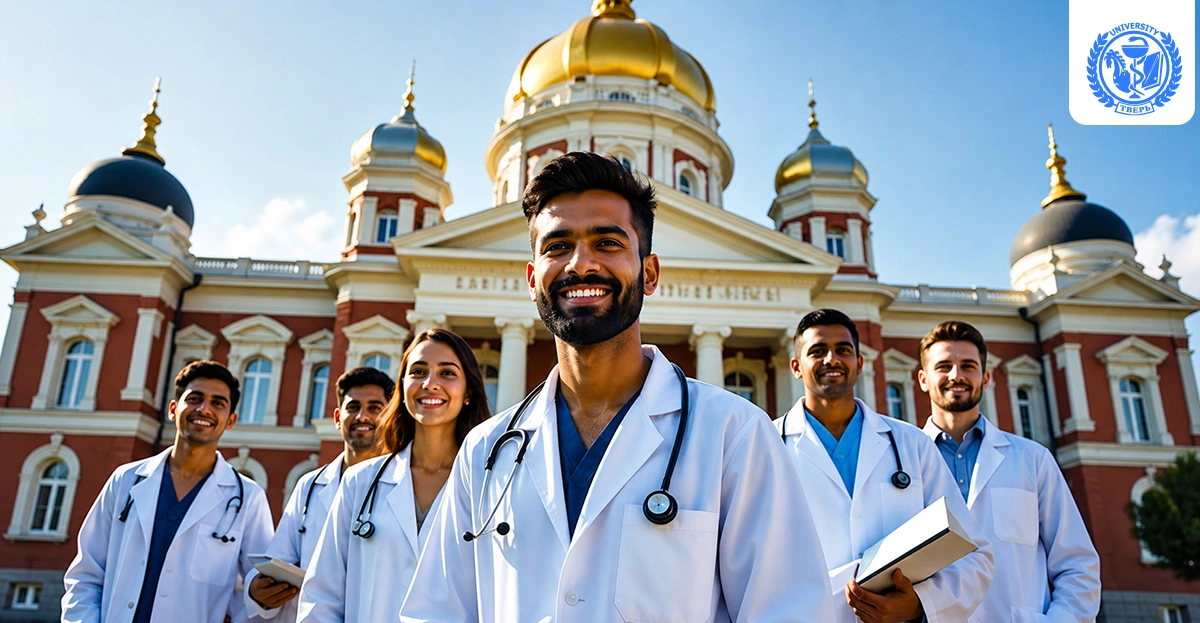
Every year, thousands of Indian students begin their search for the best medical university in Russia, and the choice they make shapes the next six years of their life. Russia offers English-medium medical programmes, government-funded campuses and hospital-based clinical training at a fraction of the cost of private colleges in India. But the country has dozens of institutions, and they are not equal in recognition, teaching quality or student support. This guide explains how to compare universities step by step so you can select a campus with confidence. If you are still exploring options, you can also read about Tver State Medical University to see what an established government institution looks like.
Why Students Consider MBBS in Russia
Russia has trained doctors for close to a century, and its state universities follow a structured six-year curriculum with early clinical exposure. For families comparing options for MBBS abroad, the appeal is simple: transparent tuition, on-campus hostels, no capitation fee and degrees listed in the World Directory of Medical Schools. Most institutions also host large Indian student communities, which makes the transition to a new country far easier.
-
English-medium teaching for international batches
-
Six-year programme including internship-style clinical rotations
-
Government campuses with regulated fee structures
-
Multicultural classrooms with students from across Asia and Africa
Checklist to Identify the Best Medical University in Russia
Use the checklist below as your filter. If a university fails on recognition or clinical training, no amount of marketing should change your decision.
-
Recognition and Regulatory Compliance
Start with recognition, because this decides whether you can practise in India at all. Confirm the university is listed in the World Directory of Medical Schools and that the course structure matches the National Medical Commission Foreign Medical Graduate Licentiate Regulations. Also check that the institution appears on the Ministry of Science and Higher Education of Russia list of accredited universities.
-
Clinical Training and Teaching Hospitals
Theory alone does not make a doctor. Ask how many affiliated teaching hospitals the university uses, when clinical rotations begin, and whether students observe or actively participate. The strongest Russian medical universities attach their departments directly to regional hospitals, so students see real patient loads from the third year onward.
-
Faculty, Batch Size and Language Support
A reasonable student-to-teacher ratio matters more than a glossy brochure. Check whether simulation labs, anatomy museums and microbiology labs are available for practical sessions. Russian language classes are also essential, since you will need conversational Russian for patient interaction during hospital postings.
-
Total Cost, Not Just Tuition
Students who study MBBS in Russia should budget for tuition, hostel, medical insurance, visa extension, and living expenses. Compare the six-year total rather than the first-year figure, and confirm whether fees are fixed for the entire course.
-
Hostel, Safety and Food
On-campus government hostels are usually safer and better monitored than private apartments. Ask about room sharing, heating, security, Indian mess facilities and the distance between the hostel and the academic block.
-
FMGE / NExT Preparation Support
The licensing exam decides your career in India. Universities that integrate FMGE-focused coaching, mock tests and mentoring give their graduates a measurable advantage over those that leave preparation entirely to the student.
-
Comparison Table: What to Verify Before You Apply
|
Parameter |
What to Ask |
Good Sign |
|
Recognition |
Is the university WDOMS-listed and NMC-compliant? |
Verifiable listing plus documented curriculum |
|
Established in |
How long has it taught international students? |
Decades of continuous operation |
|
Medium of instruction |
Is the full course in English? |
English medium with Russian language modules |
|
Clinical exposure |
Which hospitals are affiliated? |
University-attached government hospitals |
|
Accommodation |
Is the hostel on campus? |
Furnished, monitored, on-campus rooms |
|
Exam support |
Is FMGE/NExT coaching included? |
Structured on-campus academic support |
Common Mistakes Students Make
-
Choosing a university only because the tuition is the lowest
-
Relying on unverified agent promises instead of official documents
-
Ignoring the winter climate and city infrastructure of the location
-
Skipping NEET planning, which is mandatory for Indian applicants
-
Not confirming who supports them after arrival in Russia
Documents and Timeline
-
NEET scorecard, Class 10 and 12 mark sheets, passport
-
Application and admission letter from the university
-
Ministry invitation letter, followed by student visa
-
Medical tests, travel booking and hostel allotment
Applications for the September session generally open early in the year, and seats for Indian students fill quickly. Starting your documentation three to four months ahead avoids last-minute visa pressure.
Conclusion
Selecting the best medical university in Russia is not about rankings alone. It is about recognition you can verify, clinical training you can rely on, a hostel where you feel safe, and academic support that carries you through the licensing exam. Compare two or three shortlisted campuses against the checklist above, speak to current students, and read every document before you pay anything. When you are ready to move forward, explore the MBBS admission process at TSMU or learn more about the university and its campus.
FAQs
Is MBBS in Russia recognised in India?
Yes, if the university is WDOMS-listed and the course follows NMC regulations. Graduates must clear the FMGE/NExT screening examination to practise in India.
How long is the MBBS course in Russia?
The English-medium programme is normally six years, including clinical rotations in university-affiliated teaching hospitals.
Is NEET required?
Yes. Indian students must qualify NEET both for admission abroad and for licensing on their return.
Do I need to learn Russian?
Classes are in English, but basic Russian is taught because you will interact with patients during hospital postings.